Christian Hope aims to uplift readers by sharing stories, Scriptures, and insights that highlight the significance of hope within the Christian Faith. It seeks to provide a source of encouragement, especially during difficult times. it may cover theological concepts, biblical teachings, and personal testimonies that illustrate how hope plays a vital role in believers’ lives. This blog may serve as a platform for people to connect, share their struggles and victories, and support one another in their faith journeys. it fosters a sense of belonging within the Christian community.
Scripture References: Luke 1:35, John 1:14, Matthew 1:23
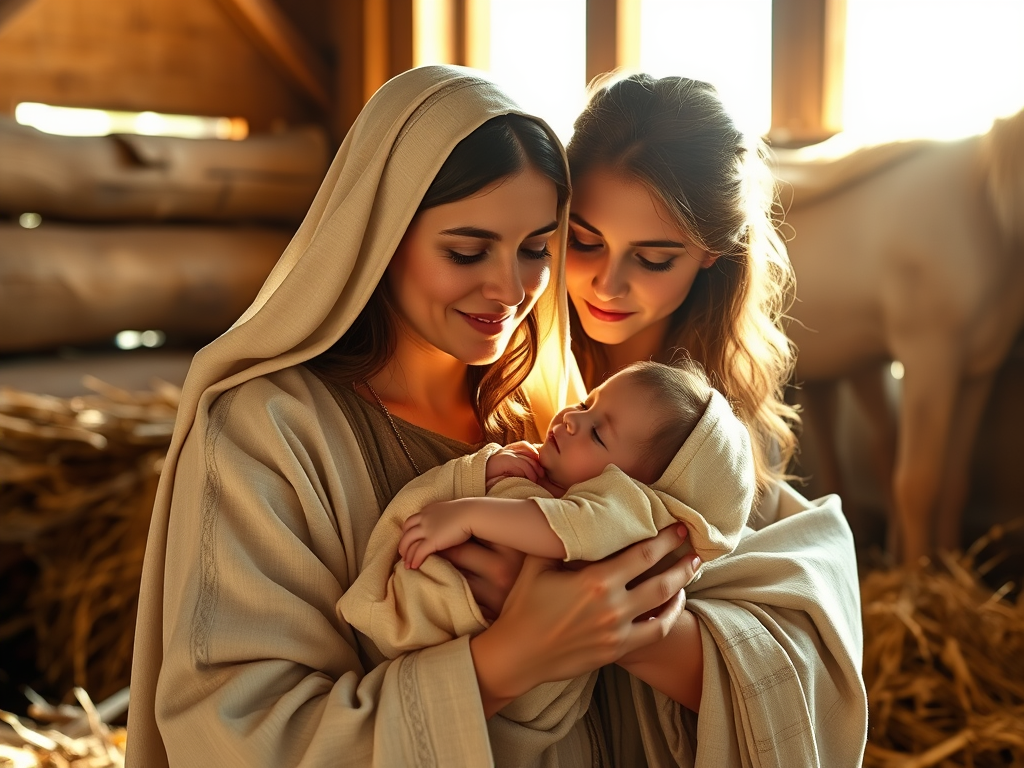
As we reflect on the dual nature of Jesus as both the Son of Mary or the Son of God, we find a profound mystery that speaks to the heart of our faith. In Luke 1:35, the angel Gabriel declares to Mary, “The Holy Spirit will come up on you, and the power of the Most High will overshadow you; therefore, the child to be born will be call holy- the Son of God.” This moment not only affirms Jesus’s divine sonship but also His humble entry into the world through a woman of faith.
Mary, chosen by God, exemplifies obedience and trust. Her response, “I am the Lord’s servant,” (Luke 1:38) reflects an acceptance of God’s will that we can all aspire to emulate. Jesus, as her son, was nurtured in a home where faith was alive. The weight of His mission as the Savior of the world began in the ordinary setting of a family, reminding us that God often works through the simplest of vessels.
John 1:14 introduces us to the idea of the Word becoming flesh and dwelling among us. This incarnation reveals God’s immense love and desire for relationship with humanity. Jesus was not only a man born of Mary but also the divine Logos, embodying grace and truth.
As we meditate on these truths today, let us embrace the essence of Jesus’s dual identity. In Him, we find the bride between heaven and earth, reminding us that God intimately understands our human experience. May we respond like Mary, inviting Jesus into the corners of our lives and trusting in His divine purpose for us.
The weight of Jesus mission as the Savior of the world began in the ordinary setting of a family, reminding us that God often works through the simplest of vessels.
Prayer: Lord Jesus, help me to recognize your presence in my daily life. May I, like Mary, be willing to embrace your will and reflect your love to the world. Amen.
“But you, Bethlehem Ephrathah, though you are small among the clans of Judah, out of you will come for me one who will be ruler over Israel, whose origins are from of old, from ancient times.” Micah 5:2 (NIV)
The book of Micah, a prophetic text from the Old Testament , addresses the social injustices and moral decay of Israel during a tumultuous period. Micah prophesies the coming of a ruler from Bethlehem Ephrathah, a seemingly insignificant town, who will bring hope and restoration to the people of Israel. This promise highlights God’s choice to bring forth greatness from humility, emphasizing that true leadership and strength often arise from unexpected places.
The promise of a ruler coming from Bethlehem Ephrathah signifies not only the birthplace of Jesus-Christ but also the fulfillment of God’s covenant with His people. This ruler is described as one who will shepherd His flock with strength and dignity, bringing peace and security. The prophecy assures the people that despite their current struggles. God has a plan for their redemption and restoration through a leader who embodies divine authority and compassion.
In today’s context, Micah 5:2 serves as a powerful reminder of hope and divine intervention in our lives. Just as the people of Israel awaited their promised ruler, we too can find solace in the belief that God is always at work, even in our darkest moments. The message encourages us to trust in God’s timing and to recognize that greatness can emerge from the most humble beginnings. As we reflect on this promise, we are called to embody the qualities of the ruler- compassion, justice, and humility- in our own lives, impacting our communities positively.
Micah 5:2 not only foretells the birth of Jesus but also invites us to embrace the hope and promise of God’s presence in our lives. As we meditate on this scripture, let us remember that even in our struggles, we are never alone, and that God is continually working to bring about His purposes through unexpected means. By holding onto this promise, we can find strength and encouragement to navigate our own journeys with faith and resilience.
The promise of the Ruler encourages us to trust in God’s timing and to recognize that greatness can emerge from the most humble beginnings.
PRAYER: Heavenly Father, Thank You for the promise of Your ruler, who brings hope and peace. May I seek Your guidance today and trust in Your plan for my life. Help me to walk in Your ways and share Your love with those around me. Grant me wisdom to reflect Your light in the world. Amen.
“In that day the Branch of the Lord will be beautiful and glorious, and the fruit of the land will be the pride and glory of the survivors in Israel.” – Isaiah 4:2
In that prophecy the branch of the Lord symbolizes hope and restoration. This metaphorical branch represents the coming of the Messiah, who brings life, growth, and renewal to a weary world. The imagery of a branch suggests that from a seemingly barren and desolate place, new life can emerge. This passage assures us that God is actively working to bring forth a new beginning, even in times of despair.
The Branch of the Lord embodies the promise of salvation and divine intervention. it signifies that no matter how dire our circumstances may seem, there is always the potential for transformation and healing. This hope is not just for the people of Isaiah’s time but extends to us today. In a world filled with challenges- such as social injustice, personal struggles, and global crises- this promise serves as a reminder that we are not alone. The Branch encourages us to look beyond our current difficulties and trust in God’s plan for restoration.
In today’s society, the message of the Branch of the Lord is profoundly relevant. Many individuals face uncertainty and fear, whether due to economic instability, health issues, or social unrest. The hope that the Branch represents can inspire us to persevere and seek positive change. As we reflect on this passage, we are called to be agents of hope ourselves, sharing kindness and support with those around us. By embodying the qualities of the Branch- growth, resilience, and renewal- we can contribute to a more hopeful and compassionate world.
Thus, the Branch of the Lord in Isaiah 4:2 serves as a powerful symbol of hope and renewal. It reminds us that even in the darkest times, God is at work, bringing forth new life and opportunities for transformation. As we embrace this message, we can find strength and encouragement to face our challenges and inspire hope in others.
No matter how dire our circumstances may seem, there is always the potential for transformation and healing in Jesus Christ, the Branch of the Lord.
Prayer: Lord, Thank You for the hope and beauty You bring into our lives. May Your Spirit guide us to embody the fruit of righteousness and shine Your light in the world. Help us to live in harmony with one another, reflecting Your grace and love to those around us. Amen.
By Jules Precile, Daily Devotion on October 28-29, 2024
Therefore, if anyone is in Christ, he is a new creation; old things have passed away; behold, all things have become new. 2 Corinthians 5:17
In 2 Corinthians 5:17, the Apostle Paul emphasizes that anyone who is in Christ is new creation; the old has passed away, and the new has come. This profound transformation impacts a believer’s self-image by instilling a sense of worth and purpose. Understanding oneself as a new creation means recognizing that past mistakes and failures do not define one’s identity. Instead, believers can embrace their new identity, which is rooted in Christ’s love and acceptance.
Being a new creation in Christ significantly enhances self-image. It encourages individuals to view themselves through the lens of God’s rather than their shortcomings. This shift in perspective fosters confidence and a sense of belonging, as believers realize they are valued and loved by God. As a result, they can approach life with a renewed sense of hope and purpose, knowing they are part of a greater plan.
This new identity also transforms how individuals interact with others. When believers recognize they’re worth in Christ, they are more likely to extend grace and compassion to those around them. Understanding that everyone is also a creation of God encourages kindness and empathy, fostering healthier relationships. This perspective can lead to a community built on love and support, reflecting the character of Christ in everyday interactions.
In summary, being a new creation in Christ profoundly impacts self-image and interactions with others. It allows individuals to embrace their identity in God, leading to a positive self-view and a compassionate approach to relationships. This transformation not only enriches personal lives but also contributes to building a loving and supportive community.
“Understanding oneself as a new creation means recognizing that past mistakes and failures do not define one’s identity.”
Prayer: Dear Heavenly Father, thank You for the gift of new beginnings and the promise of transformation through Christ. as I go through this day, help me to embrace the new creation I am in You, shedding the burdens of my past and walking in the light of Your love. May my thoughts, words, and actions reflect Your grace and lead others to see Your goodness in my life. In Jesus’ name. Amen.
By Jules Precile, Daily Devotion October 27-28, 2024.
Romans 8:18: For I consider that the sufferings of this present time are not worthy to be compared with the glory which shall be revealed in us.
The concept of future glory, as discussed in Romans 8:18, emphasizes the idea that the sufferings we endure in this life are insignificant compared to the glory that is to be revealed to us.
This passage instills hope, suggesting that despite current hardships, there is a promise of a brighter, more glorious future. This hope serves as a powerful motivator in daily life, encouraging individuals to persevere through challenges and maintain a positive outlook.
The assurance of future glory inspires resilience and determination. Knowing that our struggles are temporary and that a greater purpose awaits can transform our perspective on daily challenges. This hope encourages us to approach difficulties with a sense of purpose, reminding us that every trials is an opportunity for growth and a step to closer to the glory that lies ahead in Christ. it fosters a mindset of gratitude, as we learn to appreciate the lessons learned through adversity.
Incorporating the hope of future glory into daily life influences our actions and decisions. It motivates our goals with passion, and support others in their struggles. By focusing on the promise of a glorious future, we are inspired to live a life that reflects our values and beliefs, contributing positively to the world around us. This Hope not only uplifts us but also encourages those around us to seek their own paths toward fulfillment and joy.
In summary, the hope of future glory as described in Romans 8:18 serves as a profound motivator in our life. It shapes our perspectives on challenges, inspires resilience, and encourages purposeful living. By holding onto this Hope, we can navigate life’s ups and down with a sense of assurance and optimism, knowing that a glorious future awaits in Christ.
“Every trials is an opportunity for growth and a step to closer to the glory that lies ahead in Christ.”
Prayer: Heavenly Father, as I reflect on Romans 8:18, I am reminded that the sufferings of this present time are not worth comparing with the glory that will be revealed in us. Help me to trust in Your promises and to find hope in the midst of trials. May I always look forward to the joy that awaits me in Your presence. In Jesus’s name, I pray. Amen.
Romans 5:2 “Through whom we have gained access by faith into this grace in which we now stand, and we boast in the hope of the glory of God.”
As believers, we stand firm in grace, supported by the hope of God’s glory. This hope not only points us to eternal life and future glory but also empowers us in our present circumstances. Knowing that Christ in us assures our victory over sin and despair allows us to face life’s trials with courage.
Each day offers an opportunity to experience this hope. Whether in moments of joy or sorrow, we can lean into the truth that Christ is our anchor. The world may change, but our hope remains steadfast because it is rooted in a deep relationship with Him.
Prayer: Lord Jesus, thank You for the hope of Your glory that fills my heart. Help me to stand firm in this grace and to share this hope with those around me. May my life reflect Your glory, and may I be a vessel of Your love. Amen!
Colossians 1: 27 “To them God has chosen to make known among the Gentiles the glorious riches of this mystery, which is Christ in You, the Hope of Glory.”
The presence of Christ within us is not just a theological concept; it is a profound reality that transforms our lives. When we accept Christ as our Savior, His Spirit dwells in us, infusing us with Hope. This Hope is not a vague optimism but a confident expectation of God’s glory being revealed in and through us.
Consider how this truth affects your daily life. When faced with challenges, remember that Christ is within you, giving you strength and courage. When you encounter discouragement or doubt, reflect on Hope of glory that is rooted in your identity as child of God.
Prayer: Heavenly Father, thank You for the gift of Your Son and the hope of glory that Christ in me brings. Help me to recognize His presence in my life every day and to live in the truth of this reality. Strengthen my faith and let Your glory shine through me. Amen!
The Lord is good, a stronghold in the day of trouble;
and He knows those who trust in Him. NAHUM 1:7
Nahum is the prophet who prophesied the fall of Nineveh, the Assyrian capital. But during the doom and gloom of his book, there arises a reminder that God is a good God and He knows those who are His. In fact, Nahum revealed Jesus is a Stronghold, a haven into which you and I may run in our own day of trouble. King Solomon earlier echoed these words, saying, “The name of the Lord is a strong tower; the righteous run to it and are safe” (Proverbs 18:10).
In biblical times kings-built fortresses, called “strongholds,” where, if necessary, they could retreat and be able to defend themselves and stave oof enemies. One of the great builders of history was the first-century Judean king, Herold the Great. To this day, his protective stronghold, the Herodian, can be visited in the Judean hills south of Bethlehem. But his most magnificent accomplishment was Masada down in the Jordan Valley near the Dead Sea. Located high atop a tall mountain, he built a three-tiered palace on the cliffs of its northern edge. This entire fortress was completely self-sustaining, consisting of large water cisterns, aqueducts, agricultural areas, storage rooms Roman baths, and even a synagogue.
Masada, a popular tourist attraction today in Israel, is best known for what took place there almost two thousand years ago. When Titus and his Roman legions besieged the city of Jerusalem in AD 70, a small band of nine hundred Jewish zealots escaped the burning city and fled to the stronghold of Masada. Upon hearing this, the Roman army made its way there and encircled the mountain stronghold. To this very day, the remnants of their camps can be seen around the base of this huge mountain. The Jews held out on top of the fortress of Masada for three years. It was their stronghold in their time of trouble.
Where do you flee when you need refuge? In the days of King David, we find him time and again fleeing to one of his strongholds, saying, “The Lord is a stronghold for the oppressed, a stronghold in times of trouble. And those who know your name put their trust in you, for you, O Lord, have not forsaken those who seek you” (Psalm 9:9-10). He added, “the Lord is my light and my salvation; whom shall, I fear? The Lord is the stronghold of my life; of whom shall I be afraid?” (Psalm 27:1). We, too, have a stronghold when trouble comes.
The Lord is our stronghold. We can take refuge in Him. The night before the crucifixion, Jesus said, “At that day you will know that I am in My Father, and you in Me, and I in you” (John 14:20). Your stronghold is not in what you are, or who you are, why you are, but where you are.
Jesus told us that He is positioned “in My Father.” Then, in next breath, He revealed that” you are in Me”. Stop just a moment and think about that. He is your stronghold, and you are in Him, which is a very safe place to be. If you are in Christ and He is in the Father, then nothing can get to you that doesn’t first have to pass through God the Father and God the on to reach you. And if it penetrates that fortress, you can rest in the fact that there is a purpose for it to be in your life.
But that is not all. Jesus continued, “And I am in you.” Can you see it? Christ is taking care of the outside of you, and He is also taking care of the inside of you. What better place to find your refuge? Nahum described Him as your stronghold, your place of refuge and safety in the day of trouble.
We are left with three important reminders in Nahum 1: 7: First, the Lord is good. He is a good God and desires to bless us. Second, He knows those who trust in Him. He knows you and loves you. And lastly, He is a stronghold in the day of trouble. He is waiting for you to run to Him! And, as He promised, He will never leave you or forsake you.




 CHRISTIAN HOPE