Christian Hope aims to uplift readers by sharing stories, Scriptures, and insights that highlight the significance of hope within the Christian Faith. It seeks to provide a source of encouragement, especially during difficult times. it may cover theological concepts, biblical teachings, and personal testimonies that illustrate how hope plays a vital role in believers’ lives. This blog may serve as a platform for people to connect, share their struggles and victories, and support one another in their faith journeys. it fosters a sense of belonging within the Christian community.
Though I’ve never found myself nestled among the trees or sleeping beneath a blanket of stars, I imagine that camping is like immersing oneself in a living poem. It’s a journey where the air dances with the aroma of pine and the soft murmur of a nearby stream serenades the soul.
I can see myself sitting up a tent, each stake in the ground a promise of adventure, as the flickering flames of the campfire pulse like a heartbeat in the dark. The starlit sky becomes a vast canvas, painting dreams and laughter among friends.
In that serene wilderness, time stretches, and I’d feel a profound connection to nature’s beauty, as if the earth itself cradles me in its gentle embrace.
I envision a world where inequality isn’t a vast chasm but a garden, where we cultivate opportunities for all. To reduce social, economic, and health disparities, we must plant seeds of education, water them with compassion, and nurture them with accessible healthcare. Each person’s potential is a flower waiting to bloom, and when we enrich the soil with fair wages and support, we create a vibrant ecosystem. Just as a gardener tends to each plant, we must ensure that every individual has the resources to thrive, transforming a barren landscape into a flourishing paradise of equity and well-being.
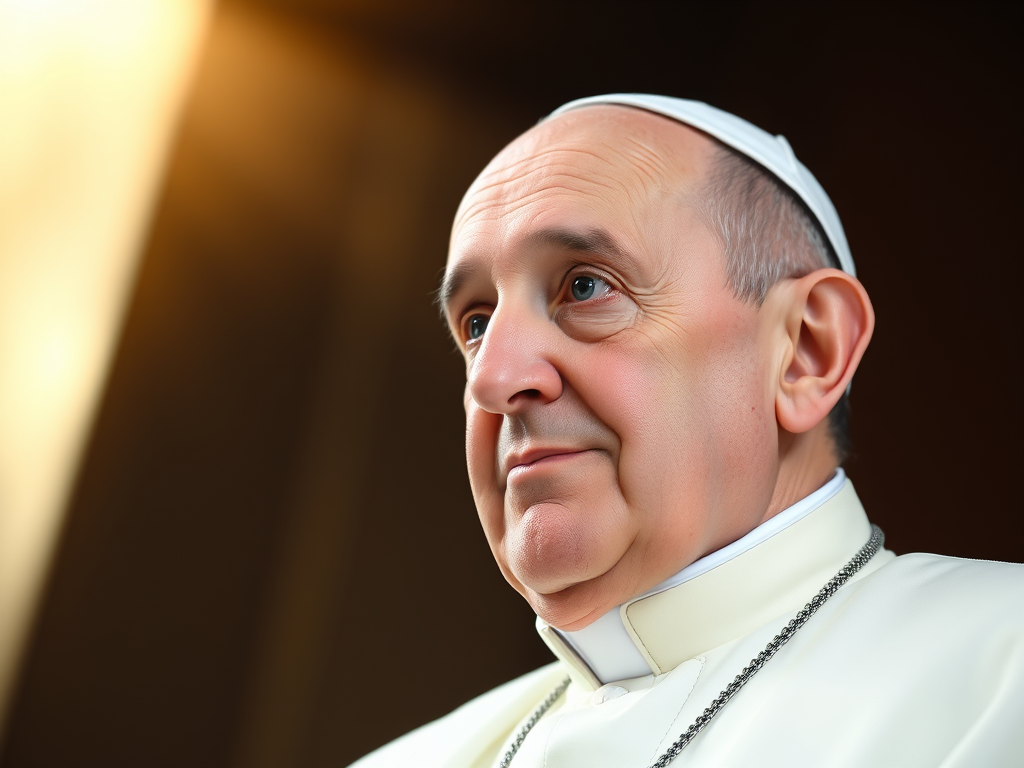
Since his election as 266th pope in 2013, Pope Francis has taken a distinctive approach to leadership within the Catholic Church, focusing on compassion, social justice, and interfaith dialogue. His papacy marks a significant shift in tone and priorities, aiming to connect the Church more closely with contemporary societal issues. As he navigated challenges both within the Church and the wider world, several key themes have emerged that define his leadership and vision for the future of Catholicism. Here, we explore five notable takeaways that highlight the essence of Pope Francis’s Papacy.
Emphasis on Mercy and Compassion: Pope Francis has consistently highlighted the importance of mercy, urging people to not only seek forgiveness but also extend compassion to others, reflecting Christian values of love and acceptance.
Focus on Social Justice: He has brought attention to issues of poverty, inequality, and the need for social reforms, emphasizing the Church’s responsibility to advocate for marginalized and vulnerability populations around the world.
Environmental Stewardship: Through his encyclical “Laudato Si’,” Pope Francis has underscored the urgency of addressing climate change and protecting the environment, calling for a collective moral response to ecological crises.
Dialogue and Interfaith Relations: Pope Francis has promoted dialogue with other religions and denominations, and denominations, aiming to build bridges and foster understanding, especially in a world often divided by sectarianism.
Church Reform and Transparency: He has initiated efforts to reform the governance of the Catholic Church, advocating for greater transparency and accountability, particularly in response to the sexual abuse crisis that has affected the Church globally.
Thus, Pope Francis’s papacy represents a transformation vision focused on mercy, social justice, and dialogue. His leadership encouraged engagement with critical global issues, urging all to embody compassion. As he famously said, “A little bit of mercy makes the world less cold and more just,” reminding us of the vital role love and understanding play in creating a better world.
When is the last time you took a risk? How did it work out?
The last time I took a risk was like standing at the edge of a cliff, heart racing as I prepared to dive the deep blue waters below. I embraced uncertainty, knowing that the splash could either invigorate or overwhelm me.
With each second that ticked by, I felt both excitement and fear intertwine like the waves crashing beneath me. When I finally jumped, I soared through the air and broke the surface, feeling the cool embrace of triumph. The experience taught me that sometimes, the most rewarding moments come from daring to leap into the unknown.
The idea of the Catholic Church becoming more Christocentric invites a profound reflection on its doctrine, practice, and mission in the modern world. At its core, a heightened focus on Christ would emphasize a personal, intimate relationship with Jesus as the foundation of faith. This development could lead to a revitalization of spirituality, encouraging believers to engage deeply in their discipleship, fostering a richer grasp of Christ’s teachings and love.
However, such a shift may also spark tensions within the Church, particularly regarding the role of tradition, sacraments, and the communion of saints. The Church has long placed significance on these elements, which serve on these convey Christ’s message and grace to the wider community. Adopting a more Christocentric stance might challenge the balance between individual spirituality and communal worship, potentially sidelining the Church’s rich liturgical life.
Moreover, a stronger focus on Christ could influence the Church’s social teachings, prompting a more active engagement with issues of justice, mercy, and compassion-mirroring Christ’s actions on earth. This change might invigorate Catholic social ministry, energizing congregants to advocate for the disenfranchised, echoing Christ’s call to serve others.
However, it could also risk reducing the Church’s broader mission to merely spreading Christ’s message without fully addressing the complexities of modern societal issues.
Thus, while a more Christocentric approach might rejuvenate the Catholic Church’s spiritual and communal life, it also requires careful navigation to maintain the delicate balance between faith, tradition, and the pressing social realities of the world today. The challenge will be to harness this focus on Christ without neglecting the communal and sacramental aspects that define the Catholic Faith.
I stood at the precipice, heart racing like a drumbeat in the silence of my doubts. Below me, the unknown loomed like an uncharted ocean, dark and mysterious, teeming with possibilities. I closed my eyes, took a deep breath, and leaped into the abyss, trusting the wings of my dreams to carry me.
As I feel, the air rushed past me-a torrent of fears and questions, but amidst that chaos, I felt the exhilarating thrill of freedom. This plunge was my choice, a risk that peeled back the layers of comfort I had wrapped around myself. I dared to chase what felt impossible, and with every heartbeat, I soared higher, cutting through clouds of uncertainty.
When I landed, I found myself not only intact but transformed. What seemed like a reckless dive turned into a soaring flight that illuminated my path. The thrill of that leap infuses my spirit, a reminder that sometimes, stepping off the edge is the only way to discover the vast sky of potential within me. I don’t regret that leap; it was where I found my wings.
The Pope has long been recognized as a pivotal figure in the Catholic Church and beyond, wielding substantial influence over global religious, social, and political landscapes. The death of Pope Francis marks a significant moment in Church history, as he has navigated a variety of contemporary issues that resonate with a diverse audience.
His emphasis on compassion, environmental stewardship, and social justice has not only shaped the Catholic Church’s dialogues but has also prompted broader discussions on morality and ethics in society.
Pope Francis has repositioned the Church as a pastoral organization that seeks to engage with the complexities of modern life, advocating for the marginalized and pressing for action against climate change. His leadership has extended beyond the realm of Catholicism, as immigration, poverty, and inequality, encouraging interfaith dialogue and a global approach to humanitarian.
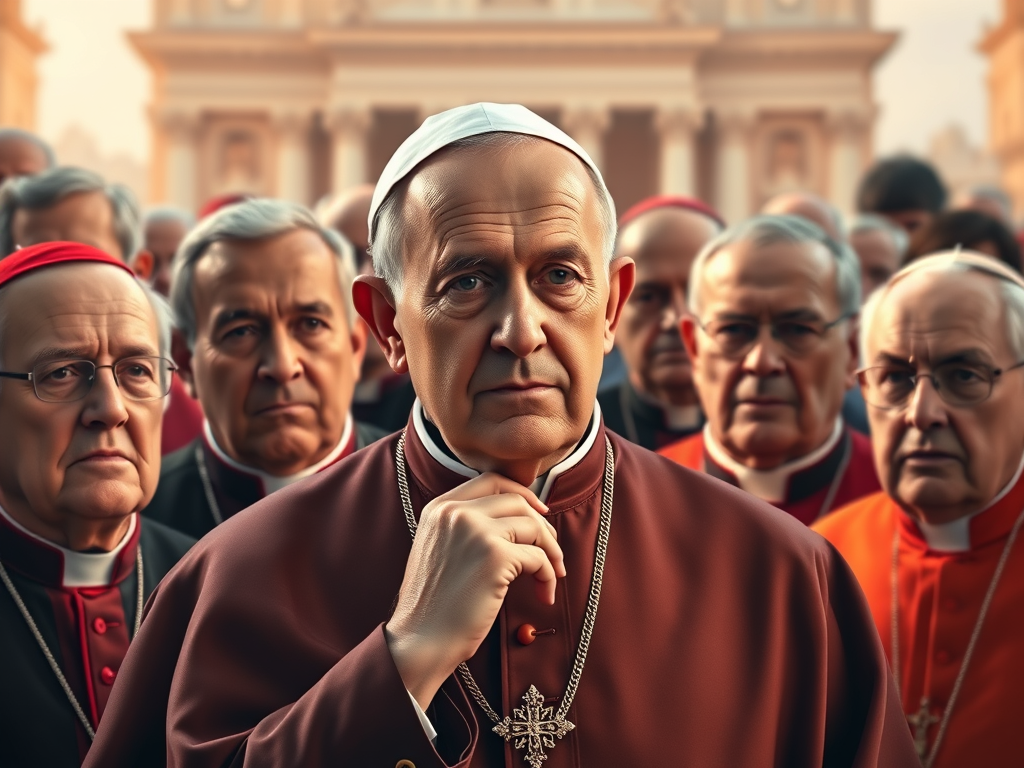
In the wake of his passing, the selection of the next Pope becomes critical, with potential candidates within the College of Cardinals who could continue or shift the trajectory set forth by Francis. Here are some cardinals often considered prominent successors:
Cardinal Pietro Parolin (Secretary of State, Italy) known for his diplomatic approach and experience within the Holy See, he may carry forward Francis’ social teachings.
Cardinal Luis Antonio Tagle (Archbishop of Manila, Philippines): Tagle is known for his strong pastoral presence and commitment to social justice, aligning closely with Francis’ message.
Cardinal Robert Sarah (Former Prefect of Congregation for Divine Worship, Guinea): Sarah is a more conservative option, known for his traditionalist views while emphasizing the need for reverence in worship.
Cardinal Oscar Rodriguez Maradiaga (Archbishop of Tegucigalpa, Honduras): A close adviser to Pope Francis and a champion of social justice, his candidacy could maintain the current papal direction.
Cardinal Christoph Schonborn (archbishop of Vienna, Austria): Known for his open-minded approach and reformative ideas, he could balance tradition with necessary updates to Church Doctrine.
Cardinal Blase Cupich (Archbishop of Chicago, USA): Cupich is seen as a progressive voice in the U.S Church, addressing contemporary issues with a pastoral touch.
The election of the Pope is a moment of profound significance, not only for the Catholic Church but for the global community as it reflects ongoing shifts in culture, belief, and morality. The successor to Pope Francis will play a crucial role in navigating these complexities, influencing millions around the world and defining the future of the Church.
Write about a time when you didn’t take action but wish you had. What would you do differently?
There was a moment in my life when I stood at the edge of opportunity, like a kite tangled in its string while the wind beckoned it to soar. I remember the chance to approach someone I admired, yet fear tied my feet to the ground. I watched as the vibrant colors of potential drifted away, leaving me with a dull gray of regret.
Looking back, I wish I had wrested free from that string, guided by courage instead of hesitation. It was as if I had a map to hidden treasure, but I let the moment slip through my fingers like sand. If I could rewind time, I would untangle the knots of doubt and step forward boldly, ready to explore the horizon of possibilities. I’d embrace the turbulence of uncertainty, trusting the gusts to carry me high and far.
Now, when opportunity taps on my shoulder, I remember the lessons of that anchored kite. I strive to break free of my fears, to leap into the wind-for life waits for no one.
Scripture: “For if the dead are not raised, not even Christ has been raised; and if Christ has not been raised, your faith is worthless; you are still in your sins.Then those also who have fallen asleep in Christ have perished.” 1 Corinthians 15:16-18
In 1 Corinthians 15:16-18, the Apostle Paul makes a profound argument regarding the resurrection of Christ and its critical importance to the Christian Faith: “For if the dead are not raised, not even Christ has been raised; and if Christ has not been raised, your faith is worthless; you are still in your sins. Then those also who have fallen asleep in Christ have perished.“. But what is the context of this writing? Paul, writing to the Corinthian church, addresses a crisis of belief surrounding the resurrection of the dead. Some members of the congregation were questioning the resurrection’s validity, which directly contradicted the foundational aspect of the gospel. Paul emphasizes that the resurrection of Jesus is not just a miraculous event but the cornerstone of Christian Faith. If Christ has not been raised, then the entire Christian doctrine collapses; believers remain in sin, and those who have died in faith have no hope.
What are the implications of the resurrection of Christ for us today?
The Certainty of Our own Resurrection: Paul’s teaching reinforces the promise of resurrection not only for Christ but for all who believe in Him. This assurance is vital for our hope in eternal life and provides comfort in the face of death.
The Importance of Belief: Our faith hinges on the reality of the resurrection. It challenges us to examine the foundation of our beliefs-are they rooted in the power of Christ’s victory over death, or are they merely cultural or intellectual?
Living in Light of the Resurrection: Understanding that Christ has indeed risen invites us to live with purpose and hope. We are encouraged to share the gospel, knowing that it is founded on a relationship with a risen Savior who has triumphed over sin and death.
Unity in the Body of Christ: The resurrection of Christ serves as a unifying truth for all believers. In a wold often divided by differing beliefs and ideas, it is this core doctrine that binds us together as the church.
In reflection, 1 Corinthians 15:16-18 calls us to not only affirm our belief in the resurrection but to allow it to shape our lives and interactions in a profound way. It exhorts us to live boldly, confident in the hope and assurance that we are forgiven and have eternal life because Christ is risen.
Daily Prayer
Heavenly Father,
Thank You for the gift of Your Son and the victory of His resurrection. Help us to firmly believe in the hope of eternal life and to live out our faith with courage and joy. May we share this truth with others and find strength in Your promises, even in difficult times. Guide us in our daily walk, revealing Your love and grace. In Jesus’ name, we pray. Amen.
After a demanding day, I seek my oasis amidst the desert of responsibilities. The hustle and bustle of my daily tasks can feel like an arid expanse, leaving me parched for rejuvenation. To unwind, I carve out a tranquil space, much like an oasis offers a refreshing reprieve for weary travelers. I begin by dimming the lights and softening the atmosphere, allowing the vibrant chaos of the day to fade like distant echoes in the wind.
I immerse myself in the soothing waters of my favorite book, letting the words wash over me, each page a gentle wave lapping against the shore of my mind. As the narrative unfolds, I drift into a serene current, floating away from the day’s burdens. Music becomes my breeze, carrying away the remnants of stress and inviting calm.
Finally, I close my eyes to visualize a peaceful landscape-green pastures and clear skies-where I can replenish my spirit. In this sanctuary, I find solace and strength, preparing myself to face another day with renewed vigor and clarity.






 CHRISTIAN HOPE